Infographic
Cyber Resilience in 2026: Why Containment Is the New Prevention
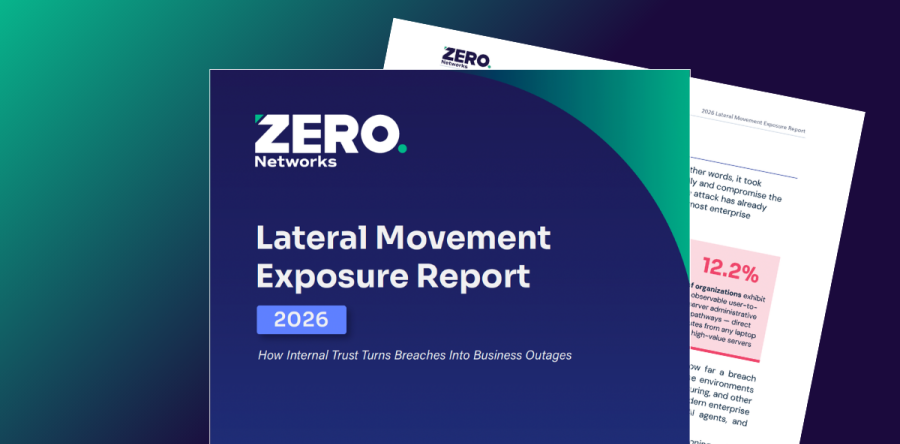
Download the InfographicZero Networks analyzed approximately 3.4 trillion activities across 400 enterprise environments over a 12-month period to understand how real attacks unfold after initial access.
We uncovered that most enterprise security risk is driven by the routine abuse of normal, trusted access paths – not rare zero-day exploits or novel attack techniques. These findings point to a clear conclusion: enterprises don’t need more alerts; they need fewer paths for attackers to move.
Building cyber resilience in 2026 means prioritizing proactive threat containment by eliminating always-on access and measuring what really matters: time-to-containment and blast-radius reduction.
 Zero’s threat analysis paints a clear picture of cyber resilience for business leaders. In 2026, the objective must be structural immunity – where systems are invisible by default, access is granted only when explicitly required, and blast radius is constrained by design rather than response speed.
Related Content

- Blog
- Ransomware & Lateral Movement Protection
June 30, 2026
Top 10 Lateral Movement Risks in Enterprise Networks (and What to Do About Them)

- Blog
- Ransomware & Lateral Movement Protection
June 18, 2026
10 Common Lateral Movement Techniques and How to Stop Them

- Blog
- Ransomware & Lateral Movement Protection
June 17, 2026
How to Prevent Lateral Movement: Cybersecurity Risks and Strategies

- Blog
- Ransomware & Lateral Movement Protection
May 19, 2026
How to Stop Ransomware Before It Disrupts Operations

- Blog
- Ransomware & Lateral Movement Protection
April 29, 2026
What Is AI-Driven Lateral Movement (AILM)?

- Blog
- Ransomware & Lateral Movement Protection
January 27, 2026
Best Tools for Lateral Threat Prevention: Microsegmentation Feature Guide

- Blog
- Ransomware & Lateral Movement Protection
January 27, 2026
How to Protect Against Ransomware (2026 Guide)

- Blog
- Ransomware & Lateral Movement Protection
December 15, 2025
EDR Security Gaps: Why Instant Breach Containment Beats Detection

- Blog
- Ransomware & Lateral Movement Protection
October 03, 2025
The Future of Hybrid Mesh Firewalls: How Automated, Identity-Aware Microsegmentation Is Critical to Blocking Lateral Movement
Trusted by


