PREVENTING IDENTITY-BASED ATTACKS
Enhancing Identity Security: Everything You Need to Know About Identity Access Control
Organizations have long tolerated lax access controls, over-permissioned accounts, and low visibility into the identities accessing critical systems. Now, the stakes are too high to accept the status quo – security teams need to close identity protection gaps before attackers slip through them.
Table of Contents
- What Is Identity Access Control?
- The Role of Identity in Cybersecurity: Trends, Challenges, and the Cost of Weak Controls
- Types of Access Control: Solutions and Strategies
- Access Control Compliance: Regulatory and Cyber Insurance Requirements
- Identity Access Control Best Practices
- How to Build Proactive Identity Protection
Reactive strategies like identity firewalls can’t keep up with the pace and sophistication of today’s threat landscape. Instead, organizations need to rearchitect access so every identity – human or machine – automatically operates with true least privilege.
To help organizations understand how to secure identities as a new perimeter, we’ll take a deep dive into identity access control, explain how it maps to regulatory and insurance requirements, and share best practices for turning identity protection into a proactive defense.
What Is Identity Access Control?
Identity access control is the process of ensuring that only the right people, devices, and applications have access to the right assets – at the right time. At its core, it’s about verifying who (or what) is requesting access and determining whether that request should be granted.
With identity-based attacks on the rise, this discipline has become central to robust identity security strategies. According to Verizon’s 2025 Data Breach Investigations Report, over 60% of breaches involved the human element, including stolen credentials and phishing attacks. Identity access control directly addresses this risk by enforcing strict verification and least privilege principles, laying the foundation for a Zero Trust architecture, which operates on the principle of “never trust, always verify.”
Identity and Access Management (IAM) vs. Identity Access Control
Identity and access management (IAM) is a cybersecurity discipline that helps organizations manage identities and control access with a framework of tools, policies, and processes. Because of this broad definition, IAM platforms may include a number of point solutions for managing identities across different parts of their lifecycle (think user provisioning, authentication, SSO, and access governance tools).
Identity access control is a more focused area of identity protection that deals with specific enforcement strategies – it’s the mechanism for ensuring access is continuously verified and limited according to least privilege.
The Role of Identity in Cybersecurity
Modern cybersecurity requires multi-dimensional, holistic protection across every axis of network traffic:
North-South: Securing the perimeter against external access

East-West: Preventing unauthorized lateral movement with internal controls
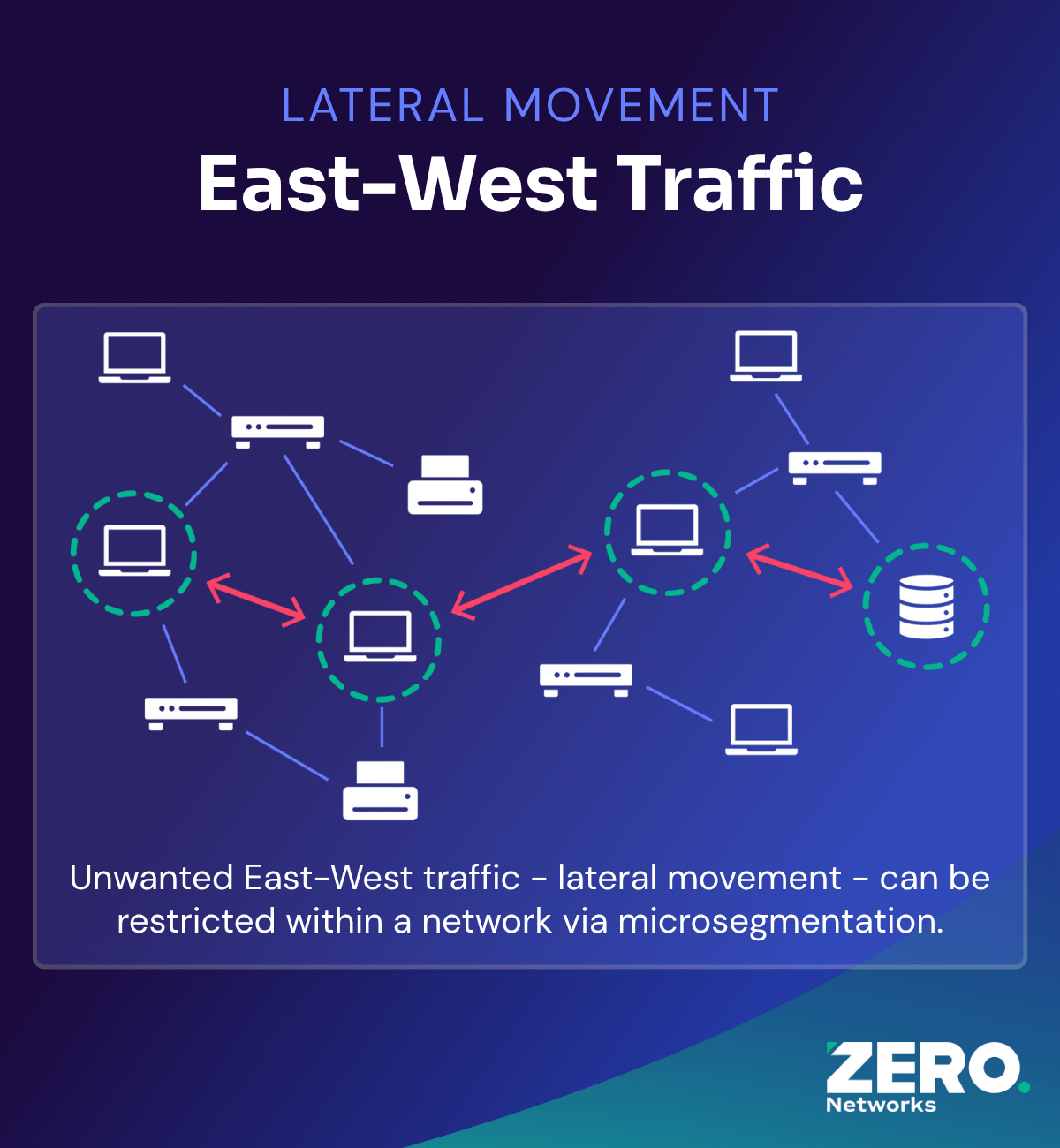
Up-Down: Controlling access between layers to protect sensitive areas of the network

Strategies like perimeter firewalls and internal segmentation provide defense across North-South and East-West traffic, but without granular identity controls, Up-Down movement is vulnerable. In other words, security strategies remain two-dimensional without identity-based access controls.
Why Identity Security Matters: The Cost of Weak Controls
Breaches leveraging common identity-based tactics for initial access (like phishing and compromised credentials) cost up to $330,000 more than the average data breach, according to IBM’s latest report. These attacks are also difficult to detect, typically taking about 190 days to identify.
As identity security threats grow more pronounced, several trends highlight the unique challenges of modern identity protection.
Identity Security Trends and Modern Challenges
The identity threat landscape is shifting, reorienting around new and evolving risks like:
- Accidental credential exposure: Credentials used by system admins and developers, such as JSON Web Tokens, can accidentally make their way into public code repositories, leaving organizations exposed.
- Third-party access vulnerabilities: Breaches involving third parties are on the rise. For example, in the Snowflake breach, hackers are thought to have stolen Snowflake customers’ credentials by breaching an MSP; from there, the attackers targeted Snowflake cloud storage at other organizations in a far-reaching campaign that highlights the urgent need to limit third-party vendor and partner access.
- Multiplying machine identities: Machine identities (like service accounts and API tokens) now make up over 70% of networked identities – because they’re notoriously overprivileged, difficult to discover, and equally challenging to secure, machine identities pose a growing security risk.
- A booming access broker economy: Advertisements for access brokers increased 50% YoY in 2024 as attackers’ use of infostealers accelerates alongside demand for valuable credentials.
- AI-enabled tactics: 80% of ransomware attacks reviewed in new research from MIT used AI for everything from phishing campaigns and deepfake-driven social engineering to password cracking and more. In other words, the age of AI makes identity a more glaring security vulnerability than ever.
Types of Access Control: Solutions and Strategies
Access control approaches typically fall into a few broad categories that determine how rules are applied to identities and resources:
- Attribute-Based Access Control (ABAC): Grants access based on factors like location, device, time of day, or security posture.
- Role-Based Access Control (RBAC): Assigns permissions based on defined job roles, such as HR manager or system administrator.
- Mandatory Access Control (MAC): A centralized control model where access decisions are enforced by a system administrator.
- Discretionary Access Control (DAC): Resource owners decide who can access their assets, commonly found in file system permissions.
In practice, these approaches may be implemented through solutions like:
- Network Access Control (NAC): Restricts devices or users from connecting to networks unless they meet policy requirements.
- Access Control Lists (ACLs): Define which users or systems are permitted to access specific resources and what operations they can perform.
- Privileged Access Management (PAM): Specialized controls for securing admin and service accounts.
- Multi Factor Authentication (MFA): Strengthens identity verification by requiring multiple forms of evidence before allowing access to a specific system or action.
- Identity Segmentation: Enforces granular access controls based on the identity of users, devices, or applications, only allowing access to pre-approved assets and logon types. These policies follow an identity through a network, leaving no hidden gaps for attackers to exploit.
Organizations may combine multiple solutions to achieve robust identity access control. For example, by combining identity segmentation and just-in-time MFA, security teams can dynamically grant privileged access to approved identities.
Access Control Compliance: Regulatory and Cyber Insurance Requirements
As requirements from regulators, auditors, and insurers grow stricter, identity-based access controls are some of the most common mandates. Many of the best-known regulatory standards and industry frameworks include provisions for identity control.
NIST Cybersecurity Framework (CSF)
The NIST CSF highlights access control under its Protect function, requiring organizations to manage authorizations and authentication to sensitive assets.
Digital Operational Resilience Act (DORA)
For financial institutions in the EU, DORA emphasizes identity security and role-based access as part of operational resilience. Regulators want institutions to prove they can withstand cyberattacks and continue operations; effective identity controls are key to this objective.
NYDFS Cybersecurity Regulation (23 NYCRR Part 500)
Section 500.07 of the NYDFS Cybersecurity Regulation emphasizes the importance of limiting access privileges within an organization to ensure that employees, contractors, and systems can only access the information and systems necessary for their roles – the framework also requires organizations to regularly review and update access policies.
HIPAA
HIPAA mandates that covered entities enforce strict access controls, ensuring that only authorized personnel can access electronic protected health information (ePHI). The regulation requires technical and administrative safeguards, like RBAC and continuous access monitoring, to prevent unauthorized access to healthcare records.
PCI DSS
PCI DSS requirement 7 states that organizations must restrict access to cardholder data based on a “business need-to know” principle using granular access controls.
Cyber Insurance Requirements
Role-based access and least privilege enforcement are critical for limiting lateral movement by default. To reduce the risk of identity-based attacks, insurers expect organizations to demonstrate access policies tied to business need and routine reviews of privileged access.
Identity Access Control Best Practices
Effective identity access control goes beyond piecing together discrete point solutions – it requires a thoughtful, consistent strategy that makes least privilege access a built-in component of the network.
Design Access Policies Around Network Activity
Instead of granting static permissions, build access rules informed by how users, devices, and applications actually interact. Track logon activities, account behaviors, and asset access patterns for each user to generate fine-grained policies that cover hidden security gaps without disrupting normal activity.
Secure Admin and Service Accounts
Privileged accounts are a prime target for attackers. Remove excessive privileges and ensure admin and service accounts are limited to pre-approved assets to prevent lateral movement and cut off attackers’ favorite pathways.
Apply Layered Identity Controls
Effective identity access control requires combining synergistic strategies to achieve true least privilege. By combining identity segmentation, network-layer MFA, and automated microsegmentation, organizations can create a tightly woven security fabric that automatically blocks lateral movement and applies just-in-time MFA to privileged logons. The key is to unify these controls through a single platform, so they work together seamlessly rather than adding operational complexity.
Automate Policy Enforcement and Updates
Manual processes don’t scale in modern environments. Automating identity policy creation and updates reduces human error, keeps pace with network changes, and ensures compliance requirements are continuously met.
Proactive Identity Protection: Adapt Access Controls Automatically with Zero Networks
With Zero Networks, proactive identity protection is effortless, scalable, and nondisruptive. Zero granularly segments all network assets and identities, folding in integrated network-layer MFA for additional security.
Chris Turek, CIO of Evercore, describes Zero’s multidimensional approach to identity protection this way:
Zero deploys in a click, automatically pinpointing every network identity – including service accounts. During a learning period, Zero tracks behavior to automatically generate deterministic policies; once applied, these policies ensure all identities are automatically segmented – even admin and service accounts.
Learn how you can strengthen (and simplify) identity access control for your organization – request a demo.