AI Security Best Practices: How to Close AI Vulnerabilities with a Containment Architecture
Published September 04, 2026

Nicholas DiCola VP of Customers
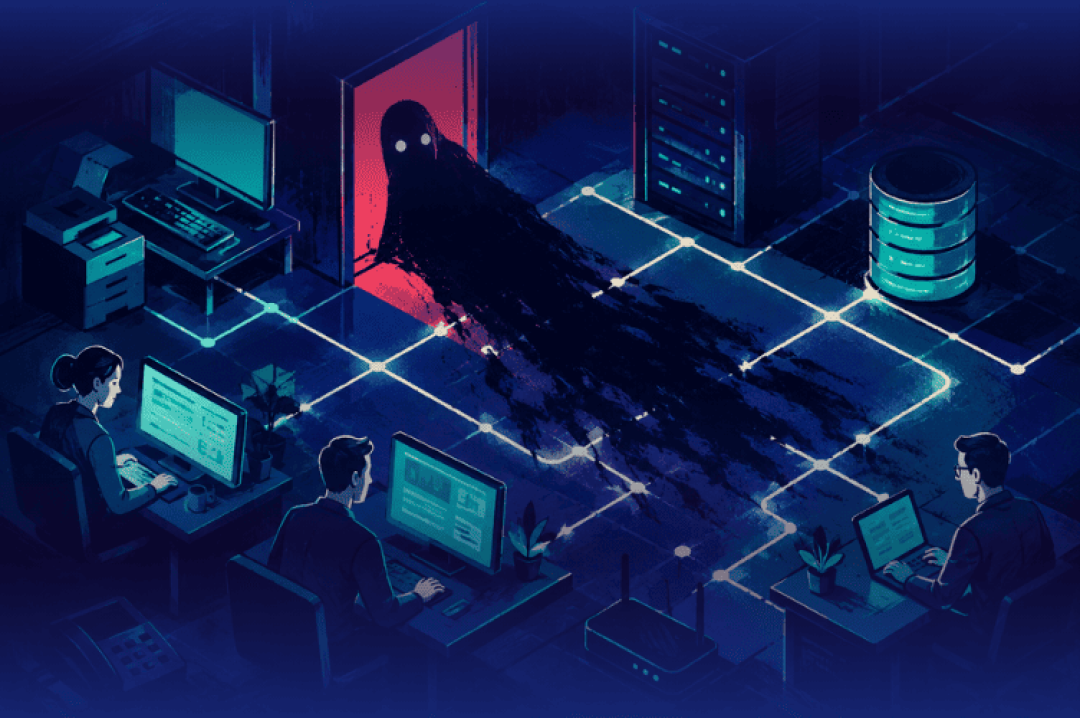
AI-driven attacks have increased 56% in the last year, as threat actors increasingly weaponize adversarial AI to execute faster, more targeted exploits. But the risk of offensive AI leveraged by attackers is only half the battle – CEOs rate data exposure through AI as a greater concern than the advancement of adversarial capabilities.
In other words, while attackers’ use of AI is alarming, rising risk exposure driven by enterprise AI adoption poses an equally urgent threat to business resilience. In fact, security breaches involving AI tools are surging even faster than attacks involving adversarial AI, rising 61% year-over-year.
As boards continue to push for accelerated AI innovation, organizations need a way to confidently adopt AI without absorbing new AI risks. We’ll lay out the AI vulnerabilities every modern enterprise should be aware of, and AI security best practices that enable security teams to govern tools, agents, and workflows by design.
Key Answers
- What are the cybersecurity risks of AI adoption? Every new AI tool, agent, and model connection expands an organization’s internal attack surface, and AI adoption has largely outpaced security governance. AI-driven lateral movement via excessive AI agent access and autonomy, shadow AI, and LLM exposure are some of the key risks enterprises face due to accelerated AI innovation.
- Which solutions protect AI tools from exploitation? AI segmentation combines microsegmentation, identity-based access controls, always-current network visibility, and deterministic policy creation and enforcement to effectively shield an organization’s internal AI from attackers.
- What are best practices for strengthening AI security? Implement microsegmentation to proactively isolate systems, enforce least agency for all AI agents with identity-based access controls, apply deterministic guardrails to AI adoption, and maintain real-time network visibility and control.
AI Security Risks: How Is Enterprise AI Adoption Increasing Cyber Risk Exposure?
Nearly 90% of organizations use AI in at least one business function, with AI agent adoption expected to grow 85% within the next year. Amid this rapid acceleration, it’s no wonder that 87% of security leaders rate AI vulnerabilities as their organization’s fastest growing cyber risk.
As AI becomes more embedded across business functions, it introduces risk through a set of related vectors: the AI agents acting autonomously inside the network, the AI tools that employees adopt outside of IT oversight, and the model that infrastructure organizations increasingly build on.
|
AI Risk |
What It Looks Like |
Key Data Point |
What to Do About It |
|---|---|---|---|
|
AI-Driven Lateral Movement (AILM) |
Overprivileged AI agents with too much access and agency serve as a lateral movement vector |
92% of organizations that experience AI-related breaches lack proper AI access controls (IBM, Cost of a Data Breach Report 2026) |
Build a Zero Trust architecture with identity-based microsegmentation |
|
Shadow AI |
Unsanctioned AI tools quietly expand the attack surface and create security blind spots |
Security incidents involving shadow AI have increased more than 2x in the last year (IBM, Cost of a Data Breach Report 2026) |
Maintain end-to-end network visibility that fuels deterministic control |
|
LLM Exposure |
Model infrastructure is accessed, tampered with, or has data extracted due to structural security gaps |
The average cost of a model inversion attack is now $6.07 million; incidents are typically driven by environmental exposure (IBM, Cost of a Data Breach Report 2026) |
Proactively isolate model infrastructure with granular network segmentation |
AI-Driven Lateral Movement (AILM) and Excessive Agency
By design, AI agents connect to multiple systems – email, CRM, databases, cloud APIs, code repositories, and more – and act autonomously across those connections. But unlike traditional identity classes (like human users), AI agents are largely provisioned without robust governance frameworks. In fact, among organizations that experienced an AI-related breach in the last year, 92% lack proper AI access controls; across all organizations, less than a third have extended Zero Trust architecture to include non-human identities (NHIs).
This uncontrolled agentic attack surface leaves organizations vulnerable to AI-driven lateral movement enabled by excessive AI agent permissions. At its core, this risk is familiar: an identity with broad internal access moving through the network in unintended ways. In other words, AI vulnerabilities aren’t novel – they’re shining a light on the structural gaps long embedded in enterprise environments.
What to do about it: Identity-based microsegmentation
The solution to AILM and overprivileged AI agent risks is to make Zero Trust the default rather than the exception. Comprehensive identity-based microsegmentation blocks communication paths unless explicitly necessary, keeps systems invisible to unauthorized users and processes, and constrains access based on identity and business need. When AI agents operate within identity-based, least privilege boundaries governed at the network layer, agentic systems cannot be leveraged into lateral movement vehicles.
Shadow AI and Ungoverned SaaS AI Usage
The number of employees that regularly use AI on their corporate devices has increased 3x year over year, but just 22% of individuals rely exclusively on tools provided by their employers – that gap between adoption and oversight is where shadow AI lives.
Security incidents involving shadow AI more than doubled in the last year, costing an average of $5.39 million, yet 68% of organizations still lack the necessary governance to manage AI or detect shadow AI. So, the challenge is twofold: uncovering unsanctioned AI usage in the first place, then implementing controls to effectively prevent shadow AI.
The core problem is that unsanctioned AI creates connectivity that nobody approved, reviewed, or is watching. If enterprises don’t know which cloud AI services users are accessing, how developers are deploying AI agents outside of the security team’s visibility, or which third-party software has embedded autonomous workflows, they’re stuck blindly chasing attackers when breaches involving shadow AI occur.
What to do about it: End-to-end network visibility and control
To mitigate shadow AI risks, security teams must first establish and maintain a real-time inventory of AI in their environment to answer three questions:
- Which SaaS AI destinations are users and devices reaching?
- Which AI agents are running and what are they connecting to?
- Which of these AI deployments fall outside of IT oversight, or where does AI access exceed operational need?
An always-current network map will deliver visibility into every AI tool, agent, and integration in the environment, delivering the insights security teams need to block unsanctioned AI by default; for example, organizations can apply network-layer controls to automatically block connections to SaaS AI destinations outside of an approved list.
LLM Exposure
Model infrastructures are code, and like any code, internal models can be reached, tampered with, and poisoned. Among AI-related data breaches, model inversion and prompt injections attacks are the most expensive, costing an average of $6.07 million and $5.89 million respectively.
While the rise in these incidents underscores the growing difficulty of protecting training data, controlling model behavior, and safeguarding sensitive outputs, the uptick doesn’t necessarily relate to model selection – the root cause is most often structural. In other words, LLM exposure is fundamentally a network access problem.
Organizations continue to prioritize innovation over security for AI models and applications, which can leave them vulnerable to AI-related breaches ... The most common causes weren’t model failures themselves, but weaknesses in surrounding systems.”
What to do about it: Proactively isolate model infrastructure
Model infrastructure should be segmented so it’s only reachable for explicitly authorized systems and identities. Granular network segmentation closes the access paths attackers rely on to tamper with or extract data from a model, without requiring that security teams fully understand the model’s internal behavior in order to protect it.
4 AI Security Best Practices: How to Govern AI Tools, Agents, and Workflows
Eighty percent of organizations say AI has increased productivity; security leaders need a way to protect AI vulnerabilities without hampering that business value. The key is building an AI-ready network architecture with a deterministic enforcement layer governing what AI can reach and do, so new capabilities adopted by the business don’t quietly expand the attack surface.
|
Best Practice |
What It Does |
Why It Matters |
|---|---|---|
|
Microsegmentation |
Closes lateral movement paths by default, proactively limiting blast radius |
Attacks originating from compromised or misconfigured AI are contained automatically |
|
Least Agency Enforcement |
Applies identity-based, least privilege access controls to every AI agent |
The potential damage from agent compromise is proactively limited |
|
Deterministic Guardrails |
Enforces access policies informed by real network behavior |
AI access controls stay accurate as enterprise adoption scales |
|
Real-Time Visibility |
Continuously maps AI agents, SaaS AI usage, and model access |
Risk can be identified in real time, enabling enforcement as soon as new AI is deployed |
Implement Microsegmentation to Proactively Constrain Blast Radius
Microsegmentation eliminates the broad internal reachability that makes AI exploitation so risky, closing lateral movement pathways by default so if an AI tool is compromised or misconfigured, the impact is automatically contained. This way, new AI is deployed inside a network that’s already hardened – a containment architecture is designed to neutralize risk, so AI vulnerabilities aren’t inherited.
Enforce AI Agent Authorization Governance with Identity-Governed Access for Every Connection
The OWASP Agentic Applications Top 10 formalized the Least Agency principle: contain an agent’s autonomy, tool access, and decision-making authority to reduce the impact of compromised AI agents. In practice, this means combining identity-based access controls and network-layer MFA for just-in-time privileged access, ensuring AI agents communicate only with explicitly authorized systems, only access approved resources, and require human approval before performing sensitive administrative actions.
Scale AI Adoption Safely with Deterministic Guardrails
Security policy enforcement must be deterministic, based on real network behavior rather than likely guesses. By leveraging a deterministic, human-on-the-loop automation engine for policy creation and enforcement, organizations can ensure AI access controls stay up to date as the network evolves, enabling peace of mind that rapid AI adoption won’t create hidden security gaps.
Maintain Comprehensive Real-Time Network Visibility
Enterprises need continuous, real-time visibility into which AI agents are running, what cloud AI services users are accessing, and how model infrastructure is being accessed, mapped against actual business need. This network map both surfaces risks and enables real-time enforcement, giving security teams the power to generate and simulate segmentation policies as AI risks emerge.
AI Segmentation: Contain AI Cyber Risk Exposure with Zero Networks
AI innovation doesn’t have to create AI risk exposure. Zero Networks’ AI Segmentation capabilities give enterprises the visibility and control they need to confidently embrace AI across the business:
- AI agent control and least agency enforcement constrain AI access to the systems and services required for their assigned task
- AI lateral movement control removes the connectivity that allows attackers to pivot from AI access points, ensuring unauthorized users, systems, or agents can’t reach critical resources
- SaaS AI control governs which cloud AI services users and devices can access at the network layer
- LLM protection granularly segments model infrastructure so only authorized systems can reach it, closing the structural security gaps that allow access and tampering
Learn how you can accelerate AI innovation while containing risk by design with Zero Networks – request a demo.